
Spring 2025
Scientific exchanges
First documented exchanges with Professor Gaël Dias at Université de Caen Normandie, within GREYC, about the TruthX project.
RESEARCH AND METHOD
How can we compare accounts, examine connections between events and prepare a well-supported decision? Explore the approach guiding OpenProof, the research informing it and its limitations.
Understand the approach ↓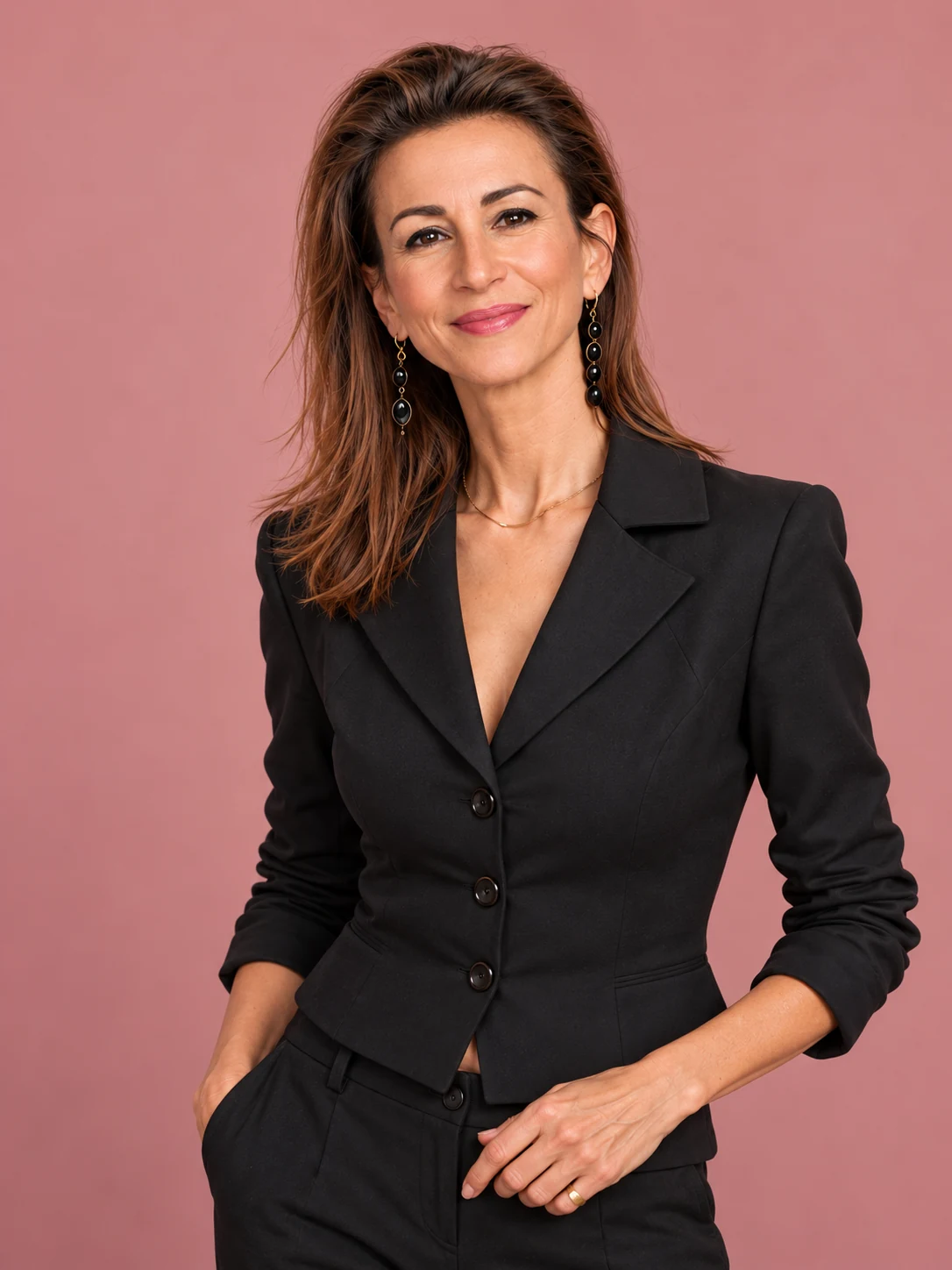
PRODUCT NOTES · 2026
Find the relevant passage, compare accounts and examine the actors’ decisions and interactions. A method note, a fictional example and the criteria we are testing.
PRODUCT NOTE · 02A witness statement in May describes a key handover in April. Follow the sequence without confusing the date of a document with the date of an event.
RESEARCH AND METHOD · 03One message can leave essential context out of view. With Stark, Hester and Fricker, examine what unfolds over time and make a situation understandable to someone who did not live through it.
Her work examines how accounts, decisions and relationships of influence take shape. Evidence analysis makes it possible to question those accounts: what is documented, what remains a hypothesis and what is still missing. Causal modelling aims to make possible links between events explicit; game theory offers a framework for studying actors’ interdependent decisions, the information they hold and their scope for action.
This direction informs the research around TruthX Engine. Game-theoretic models, their software integration and their evaluation remain to be developed; a relationship shown on a map does not by itself establish causation or intent.
TruthX Engine: method, research and limitations →01 / RESEARCH · TRUTHX ENGINE
Formalised in 2025–2026, the research collaboration between TruthX and Université de Caen Normandie, within GREYC (UMR CNRS 6072), continues into 2026–2027, under a two-year agreement. It brings together Gersende, scientific lead for TruthX, and Professor Gaël Dias, scientific lead for the laboratory, to co-develop and evaluate evidence analysis components intended for TruthX Engine.
Lucy Martin and Clément Correia-Peltier contributed to the research prototype under Professor Gaël Dias. Delivered research, software integration and evaluation are separate stages.
Read the research and contributions ↗CONCRETE STEPS
TruthX also developed through scientific exchanges and a university project. Dated milestones make this journey visible.
These steps describe exchanges and work undertaken. They do not constitute software certification or validation of the narratives’ interpretations.
First documented exchanges with Professor Gaël Dias at Université de Caen Normandie, within GREYC, about the TruthX project.
Introduction to two first-year master’s students for the annual project ‘Automatic generation of evidentiary legal case files’, supervised by Professor Gaël Dias.
Receipt of a project report, a defence presentation and code produced during the second semester.
BACKGROUND · COMMITMENT · RESEARCH
Founder of OpenProof and transformation leader.
Gersende Ryard de Parcey, also known as Gersende de Parcey, built her career between France and Canada, particularly in Montréal, in executive advisory, general management and operations leadership. Her work connects organisational transformation, data governance and the adoption of artificial intelligence. She is now extending her professional and entrepreneurial development towards Australia.
A personal upheaval with lasting professional consequences brought home a difficulty that organisations also face: having many documents is not enough to understand a situation. When facts are scattered across years, people and proceedings, their connections and questions of responsibility become difficult to examine.
Read the method and research directions →Her professional background on LinkedIn ↗Read her story and how the method began →02 / FROM EXPERIENCE TO PRODUCT
It is to address this difficulty that she is developing OpenProof. This evidence analysis tool in development aims to compare accounts, examine hypotheses about causality and bring contradictions to light, linking each finding to the documents that support or challenge it. The goal is to give lawyers and legal teams the means to build a well-supported, traceable evidentiary strategy, while retaining control of their analysis and decisions.
Her conviction: technology should help people understand situations over time, preserve personal autonomy and make better-supported decisions.
Explore OpenProof Legal →03 / PUBLIC COMMITMENT
Her testimonies in Le Parisien and on Franceinfo help raise awareness of Mémo de Vie, the platform from France Victimes for recording events and preserving documents. She advocates access to tools that help people document a situation and make it easier for justice professionals to examine it.
Further reading: ELLE — Mémo de Vie, a digital journal for documenting violence.
04 / REFERENCES
The work of Albert D. Biderman, Evan Stark and Andreea Gruev-Vintila informs her thinking on coercion and understanding situations over time.
Bringing the connections between events and documents to light.
The research of Agata Cybulska and Piek Vossen (ECB+), and James Pustejovsky and his co-authors (TimeML), helps interpret an event across different accounts: who is involved, what happens and when.
This research informs our work on OpenProof: bringing to light passages that clarify, complement or contradict an event in your case, even when you do not know which document to look in.