
BACKGROUND · COMMITMENT · RESEARCH
Gersende Ryard de Parcey
Founder of OpenProof and transformation leader.
Her leadership experience and research share a central question: how can evidence help us understand the interplay between actors? Who acts, who decides, and who influences whom? She explores power relationships, the information available to each person and the choices that shape a situation. Through OpenProof and TruthX Engine, she is developing a research direction connecting evidence analysis, causal modelling and game theory.
Actors and game theory →Gersende Ryard de Parcey, also known as Gersende de Parcey, built her career between France and Canada, particularly in Montréal, in executive advisory, general management and operations leadership. Her work connects organisational transformation, data governance and the adoption of artificial intelligence. She is now extending her professional and entrepreneurial development towards Australia.
A personal upheaval with lasting professional consequences brought home a difficulty that organisations also face: having many documents is not enough to understand a situation. When facts are scattered across years, people and proceedings, their connections and questions of responsibility become difficult to examine.
Read the method and research directions →Her professional background on LinkedIn ↗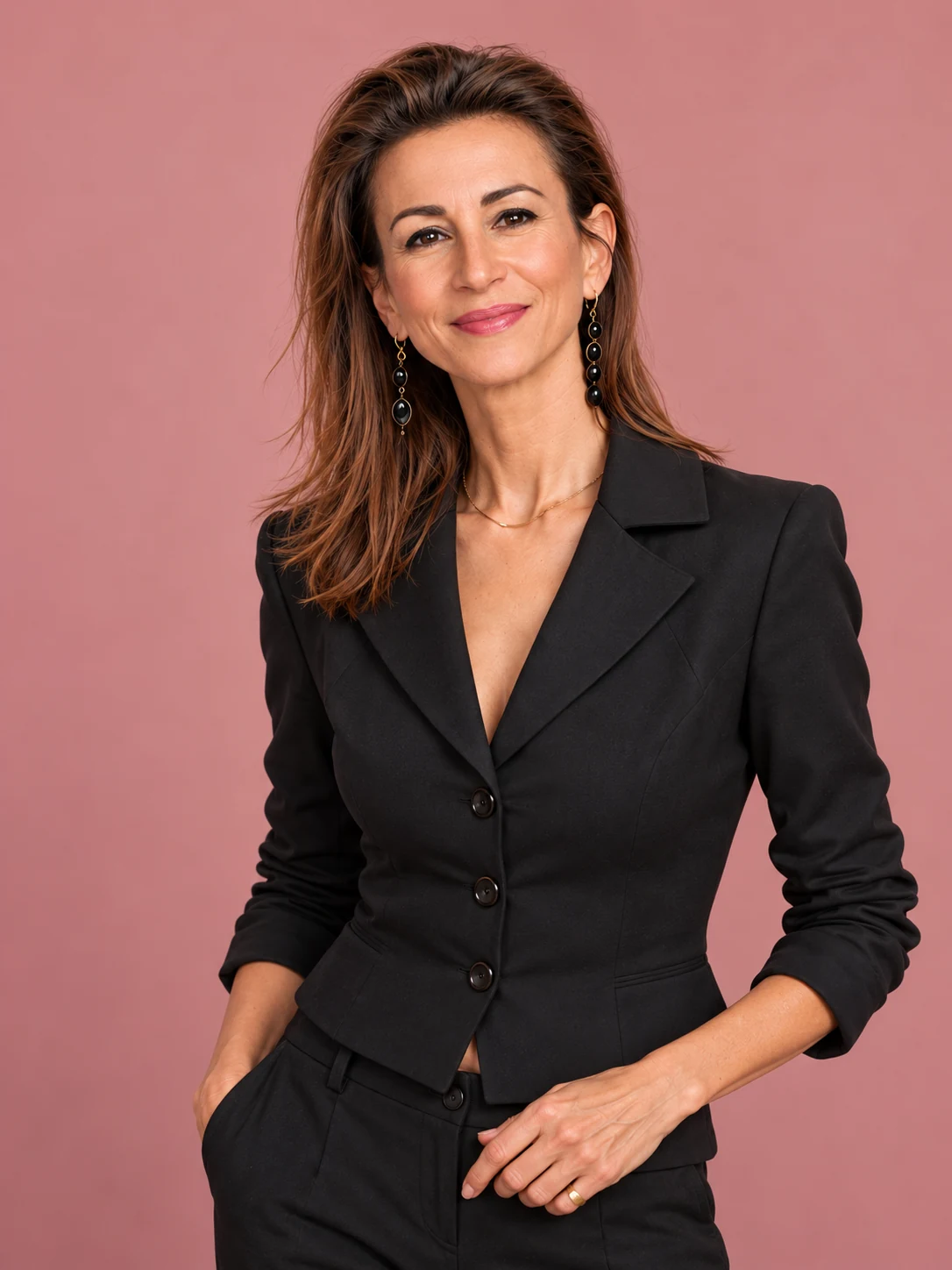
01 / FROM EXPERIENCE TO PRODUCT
Test accounts against the evidence.
It is to address this difficulty that she is developing OpenProof. This evidence analysis tool in development aims to compare accounts, examine hypotheses about causality and bring contradictions to light, linking each finding to the documents that support or challenge it. The goal is to give lawyers and legal teams the means to build a well-supported, traceable evidentiary strategy, while retaining control of their analysis and decisions.
Her conviction: technology should help people understand situations over time, preserve personal autonomy and make better-supported decisions.
Explore OpenProof Legal →Understanding the interplay between actors through evidence
Her work examines how accounts, decisions and relationships of influence take shape. Evidence analysis makes it possible to question those accounts: what is documented, what remains a hypothesis and what is still missing. Causal modelling aims to make possible links between events explicit; game theory offers a framework for studying actors’ interdependent decisions, the information they hold and their scope for action.
This direction informs the research around TruthX Engine. Game-theoretic models, their software integration and their evaluation remain to be developed; a relationship shown on a map does not by itself establish causation or intent.
TruthX Engine: method, research and limitations →02 / RESEARCH · TRUTHX ENGINE
A sustained scientific collaboration 2025–2027
Formalised in 2025–2026, the research collaboration between TruthX and Université de Caen Normandie, within GREYC (UMR CNRS 6072), continues into 2026–2027, under a two-year agreement. It brings together Gersende, scientific lead for TruthX, and Professor Gaël Dias, scientific lead for the laboratory, to co-develop and evaluate evidence analysis components intended for TruthX Engine.
03 / PUBLIC COMMITMENT
A public commitment that extends this work
Her testimonies in Le Parisien and on Franceinfo help raise awareness of Mémo de Vie, the platform from France Victimes for recording events and preserving documents. She advocates access to tools that help people document a situation and make it easier for justice professionals to examine it.
Further reading: ELLE — Mémo de Vie, a digital journal for documenting violence.
04 / REFERENCES
Research that informs her thinking
The work of Albert D. Biderman on mechanisms of coercion, Evan Stark on coercive control and Andreea Gruev-Vintila in social psychology informs her interest in understanding situations over time.